
The Leadership Shift Burned-Out Teams Are Asking For
Most leadership development still centers on the same things:
Hit the goal.
Raise the bar.
Do more.
Achieve more.
And career goals matter. I’m not suggesting otherwise.
But here’s the truth leaders are waking up to:
You cannot performance-manage your way out of burnout.
Burnout today isn’t a motivation problem. It’s an identity problem.
Why This Is Urgent
Burnout isn’t caused by working hard alone. Research consistently shows it’s driven by chronic stress, lack of meaning, and disconnection from purpose.
When leadership focuses only on output and achievement, it activates the brain’s threat and survival response - the part of the brain wired for pressure, fear, and self-protection.
But when people feel connected to meaning, autonomy, and growth aligned with who they are, we activate the sage brain:
Creativity
Curiosity
Empathy
Innovation
Resilience
That’s where sustainable performance lives. And this is where leadership must evolve.
What I Learned Leading Sales Teams
Early in my career, I led sales offices in Kansas City and St. Louis.
Our accounts were based on territory, not cherry-picked opportunities.
And let’s be honest ... Missouri and Kansas aren’t exactly competing with California, New York, or Texas when it comes to Fortune 500 density.
We didn’t have:
The biggest markets
The easiest territories
The built-in advantages
And yet—we consistently ranked at the top. We won Office of the Year.
We outperformed teams with far more opportunity on paper.
...Not because we had the “best” reps.
...Not because we worked fewer hours.
...Not because the goals were easier.
We won because we had the strongest culture.
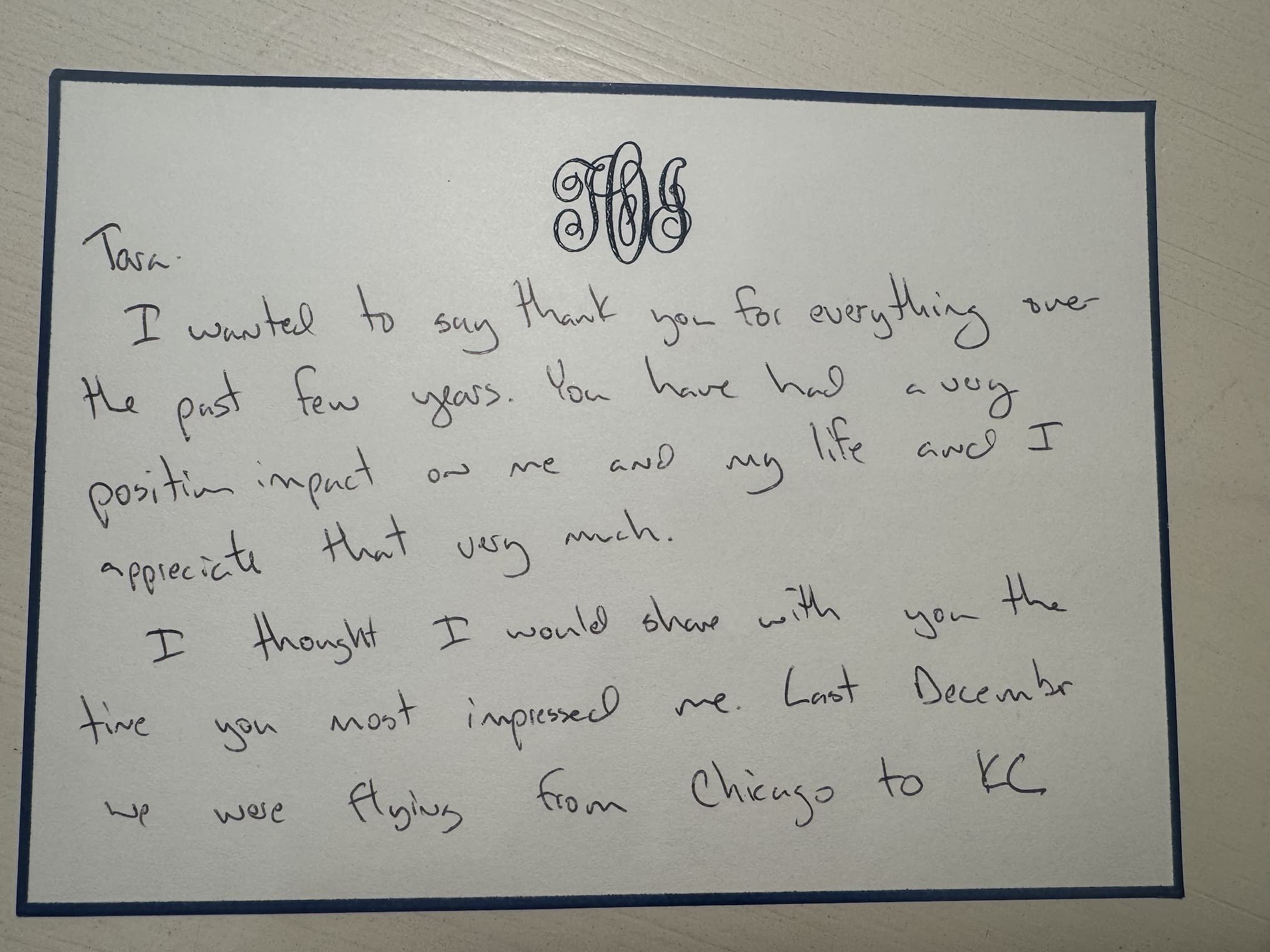
A Letter I've Kept for 18 Years
Eighteen years ago, I received a handwritten letter from one of my sales reps, Tim O’Donnell.
He wrote it shortly after I had stepped away from my leadership role to have more flexibility as a mom. I had just had my son Ben, less than a year earlier.
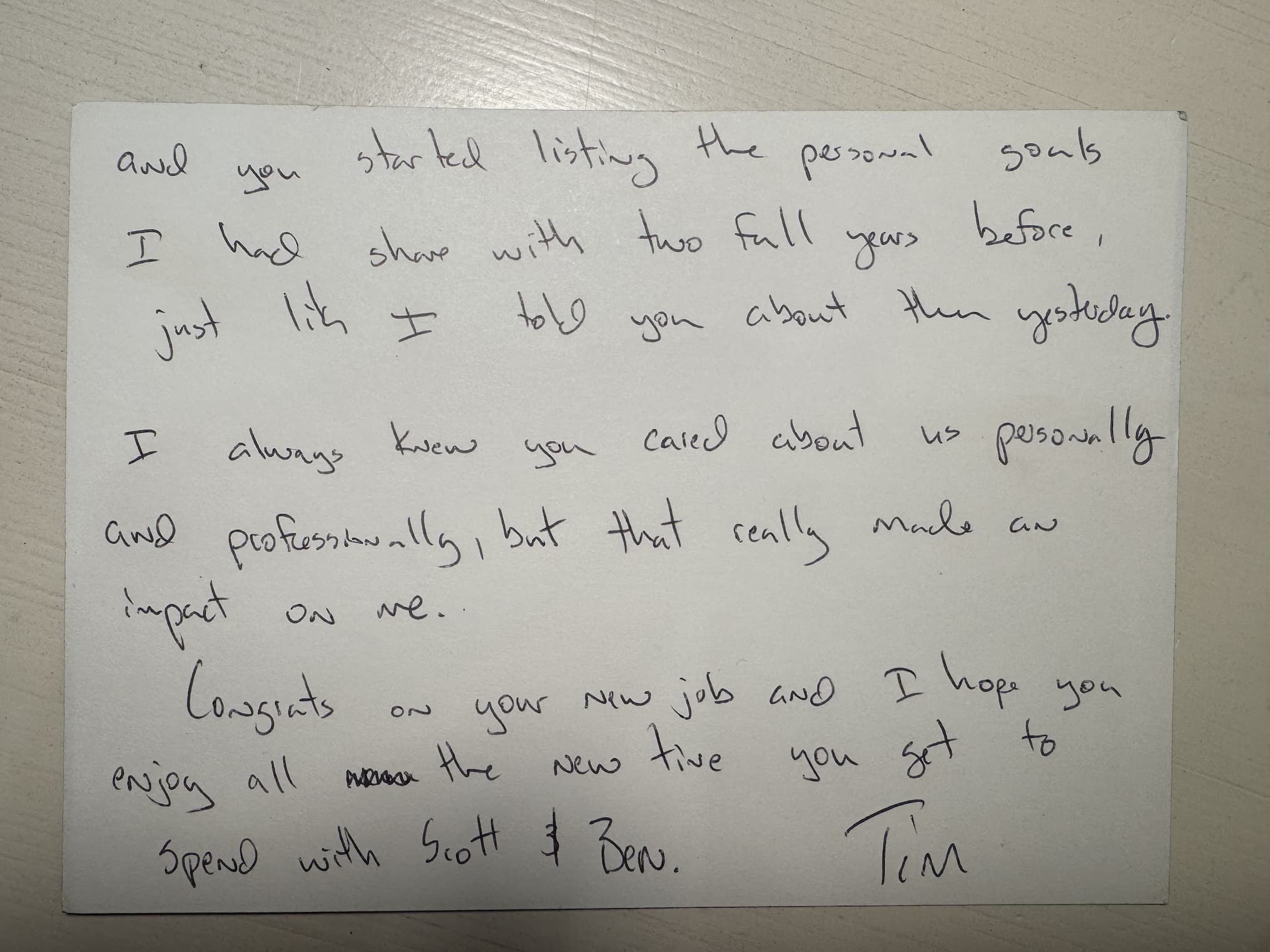
In the letter, Tim thanked me for the impact I had on his life and leadership. But this is WHY I kept the letter:
He wrote about a flight we took from Chicago to Kansas City - where I casually started listing personal goals he had shared with me years before.
And he said:
“I always knew you cared about us personally and professionally. But that really made an impact on me."
This letter is why I know this works. People want to know you care as much about their personal growth as you do about their professional output.
The Culture Advantage Most Leaders Miss
From the very beginning, I believed leadership wasn’t just about what people did - it was about who they were becoming.
I didn’t just track numbers. I tracked people.
I cared about:
Their families
Their personal goals
What energized them outside of work
Who they wanted to become - not just what they wanted to achieve
These are what I now call butterfly goals - personal goals rooted in identity, alignment, curiosity, and growth - were always part of how I led.
Not instead of career goals. Alongside them.
That’s what created a culture where people wanted to go the extra mile, where long days felt meaningful, not draining.
Why the Butterfly Goal Effect Works
Harvard research shows that when people experience:
Meaning
Autonomy
Growth aligned with identity
They don’t just feel better - they perform better.
Butterfly goals do something traditional career goals alone cannot:
They activate the sage brain, not the stress response
They reignite curiosity and creativity
They reconnect people to why they’re working - not just what they’re producing
And when leaders support personal growth alongside professional output, organizations see:
Lower burnout
Higher engagement
Stronger cultures
Sustainable performance—not short-term wins
Let Me Be Clear
This isn’t about lowering standards.
It’s not about doing less.
It’s not about replacing career goals.
It’s about recognizing that career growth without personal growth is no longer enough.
Because when people feel seen as humans, they show up stronger as professionals.
That’s the Butterfly Goal Effect.
Keep Shining - Be Who YOU Came To Be.
